15 Middle East Countries and Their Capital Cities
In depth guide to 15 key Middle Eastern countries and their capital cities. Learn about the political, cultural, and historical hubs of the region
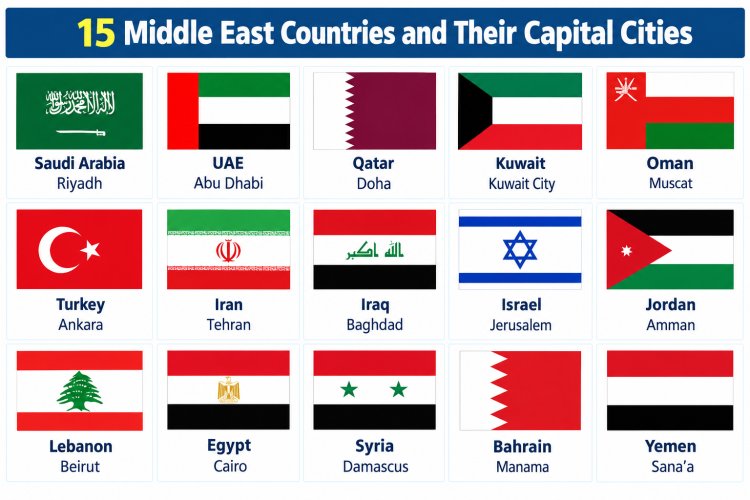
Spanning the intersection of Africa, Asia, and Europe, the Middle East is defined by its deep history, diverse landscapes, and central role in global trade. At the heart of each nation lies its capital city serving not only as the administrative seat of government, but also as a focal point for culture, finance, and urban growth.
Understanding these capital cities gives valuable insight into how different parts of the region govern, do business, and preserve their heritage amid rapid modern development.
The Arabian Peninsula and Gulf Nations
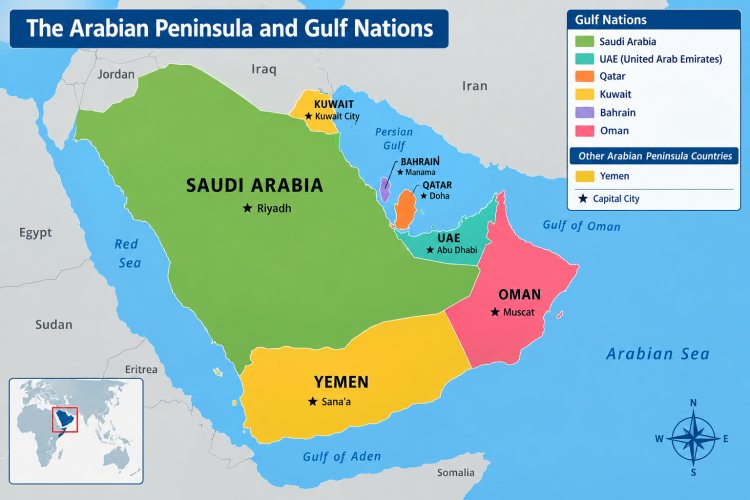
The Gulf region features several fast-growing urban centers where traditional heritage blends with ambitious infrastructure developments.
- Saudi Arabia – Riyadh: Positioned in the central Najd plateau, Riyadh is Saudi Arabia's political and administrative engine. Once a walled desert settlement, it has evolved into a vast metropolis hosting foreign embassies, financial districts, and major state initiatives like Vision 2030.
- United Arab Emirates – Abu Dhabi: As the federal capital of the UAE, Abu Dhabi is home to the country's central governance, federal ministries, and diplomatic core. While neighboring Dubai focuses heavily on commercial trade and tourism, Abu Dhabi leads national policy, industrial investment, and cultural institutions.
- Oman – Muscat: Situated along the Gulf of Oman, Muscat serves as Oman's maritime and administrative capital. The city is known for preserving low-rise traditional architectural styles while maintaining modern port operations and administrative facilities.
- Qatar – Doha: Located on Qatar's eastern coastline, Doha functions as the nation's financial, educational, and political epicenter. It hosts central government ministries, international media networks, and global conference venues.
- Kuwait – Kuwait City: Set along the shores of Kuwait Bay, Kuwait City houses the nation's parliament (National Assembly), central banks, and diplomatic headquarters, anchoring the country's administrative life.
- Bahrain – Manama: Manama is the capital of the island state of Bahrain. Long recognized as a historic Gulf trading hub, it now serves as a key financial services and administrative center.
- Yemen – Sana'a: Sana'a serves as the constitutional capital of Yemen. Famed for its multi-story burnt-brick architecture and UNESCO-recognized old city, it remains the historical and administrative heart of the country.
The Levant and Eastern Mediterranean Capitals
The Levant is home to some of the world's most historic urban settlements, where centuries of trade and culture shape modern administrative life.
- Jordan – Amman: Built across a series of hills in northwestern Jordan, Amman is the political, commercial, and administrative core of the kingdom, serving as a peaceful hub for regional diplomacy and business.
- Lebanon – Beirut: Resting on a peninsula along the Mediterranean coast, Beirut serves as Lebanon's primary port, administrative center, and historical banking hub, harboring key government institutions and cultural centers.
- Syria – Damascus: Recognized as one of the oldest continuously inhabited cities on earth, Damascus is Syria's political capital and cultural anchor, housing historic administrative headquarters and state institutions.
- Iraq – Baghdad: Straddling the Tigris River, Baghdad is the central capital of Iraq. Historically a major center of learning, it today operates as the central location for federal decision-making, governance, and national commerce.
- Israel – Jerusalem: Jerusalem operates as the seat of government, accommodating parliament, executive ministries, and judicial courts. Its diplomatic standing varies internationally, with foreign governments holding different official positions regarding embassy locations.
Regional Neighbors and Transcontinental Powers
Bordering the core Middle East region, these capitals direct major national economies and bridge connections to neighboring continents.
- Iran – Tehran: Resting at the foot of the Alborz mountains, Tehran is Iran's largest urban area and national capital. It controls the country's centralized administrative system, major universities, and industrial planning.
- Turkey – Ankara: Located in central Anatolia, Ankara was named Turkey's capital in 1923 during the formation of the modern republic. It houses the grand national assembly, state departments, and foreign embassies, while Istanbul remains the largest commercial city.
- Egypt – Cairo: Situated along the Nile, Cairo is the capital of Egypt and the largest metropolitan area in the broader Arab world. It serves as a vital political, media, and cultural crossroads linking the Middle East directly to North Africa.
Summary Table of Middle East Capitals
| Country | Capital City | Geographic Sub-Region | Key Economic & Administrative Focus |
|---|---|---|---|
| Saudi Arabia | Riyadh | Arabian Peninsula | Government Ministries, Finance, Vision 2030 |
| United Arab Emirates | Abu Dhabi | Arabian Peninsula | Federal Governance, Energy, Cultural Development |
| Oman | Muscat | Arabian Peninsula | Maritime Trade, Governance, Heritage Preservation |
| Qatar | Doha | Arabian Peninsula | Finance, Education, Global Conferences |
| Kuwait | Kuwait City | Arabian Peninsula | National Assembly, Central Banking, Energy Logistics |
| Bahrain | Manama | Arabian Peninsula | Offshore Banking, Administrative Services, Trade |
| Yemen | Sana'a | Arabian Peninsula | Constitutional Seat, Cultural History |
| Jordan | Amman | Levant | Regional Commerce, Public Administration, Tourism |
| Lebanon | Beirut | Levant | Maritime Commerce, Public Governance, Education |
| Syria | Damascus | Levant | State Administration, Cultural Heritage |
| Iraq | Baghdad | Levant / Mesopotamia | Federal Government, Energy Sector Administration |
| Israel | Jerusalem | Levant | Government Seat, Judiciary, Parliament |
| Iran | Tehran | Regional Power | Centralized Administration, Heavy Industry, Higher Education |
| Turkey | Ankara | Transcontinental / Anatolia | Parliament, Defense Sector, Diplomatic Headquarters |
| Egypt | Cairo | North Africa / MENA Link | Media, Public Sector Governance, Trade Crossroads |
Frequently Asked Questions
Question: Which is the largest capital city in the Middle East by population?
Cairo is the largest capital city by population in the broader Middle East and North Africa (MENA) region, with its metropolitan area supporting over 20 million residents.
Question: Why is Ankara the capital of Turkey instead of Istanbul?
Ankara was declared the national capital in 1923 by Mustafa Kemal Atatürk. Its inland position in central Anatolia provided strategic security advantages over Istanbul and symbolized a fresh start for the new republic.
Question: What is the administrative distinction between Abu Dhabi and Dubai?
Abu Dhabi serves as the federal capital of the United Arab Emirates, housing the Supreme Council, president's office, and ministry headquarters. Dubai functions primarily as the country's commercial, logistics, and tourism hub.
Question: Are all Middle Eastern capital cities coastal?
No. Many key capitals are located inland, including Riyadh, Ankara, Damascus, Amman, Tehran, and Sana'a, each acting as an internal administrative center.
What's Your Reaction?